Why We Keep Scrolling Even When We Know Better
At this point, everyone knows that your phone is bad for you. You’re told from all sides about it: from your mother to the newsstand. But why can’t we stop scrolling?
The simple answer, according to former Google design ethicist and co-founder of the Center for Humane Technology Tristan Harris, is that the apps are designed to make it impossible to.
Harris, as someone who was behind the design strategy at Google for years, knows better than anyone how apps are designed not to be the most straightforward, but instead to be the most addictive.
For instance, tech companies send you tons of notifications under the guise of keeping you connected, but really the intention is to keep you constantly checking and scrolling to make sure you’re not missing out on anything.
These tech companies are playing on our FOMO (Fear Of Missing Out). They know that instant dopamine hit of social approval you get when someone likes your story or reshares your LinkedIn post makes you feel chosen and wanted.
But this doesn’t actually mean anything. I like people’s posts without thinking all the time, and before I had social media, none of this ever mattered to me. So why do we place so much emphasis on getting so much social feedback?
Because understanding how others see us helps us understand ourselves. Our sense of self, in large part, comes from other people’s opinions of us. We are too inside ourselves to really know who we are. Having other people tell us makes it easier to parse what’s you, what’s ego, and what’s insecurity.
But you are not going to get the true answers online. If anything, the online world inhibits your ability to get them.
According to Pew Research Center, 89% of cellphone users admitted to using their phone during their last social gathering. 34% of them were checking for notifications.
These moments that are supposed to be filled with connections and memories are instead filled with this constant anxiety of staying connected. The more you stay connected, the more social approval. The more social approval, the more you stay connected. And this vicious cycle continues till you feel hollow, but the tech companies’ pockets don’t.
So how do we get better?
The answer is to advocate for systems that serve us instead of the corporations. We want websites to make us feel good, not bad. If we use the power of our collective voices, we can create real change that affects real people. No more synthetic online interaction, but instead true, organic connection. The kind that makes you stop the scroll.
I Hate Organization Apps. So Why Do I Love Trello?
I’ve always considered myself a highly organized person, but as soon as someone suggests software to organize something, I get cagey.
The thought of using the calendar app has always broken me out in cold sweats, but somehow a million pieces of paper tracking everything doesn’t.
For this reason, I came in a little apprehensive about the idea of a “project management system”. It at first just seemed like some corporate mumbo jumbo that could never replace my beloved planner.
That’s why I was so surprised to find that I truly enjoyed my time using Trello, a kanban-style project management website.
Now what does that even mean?
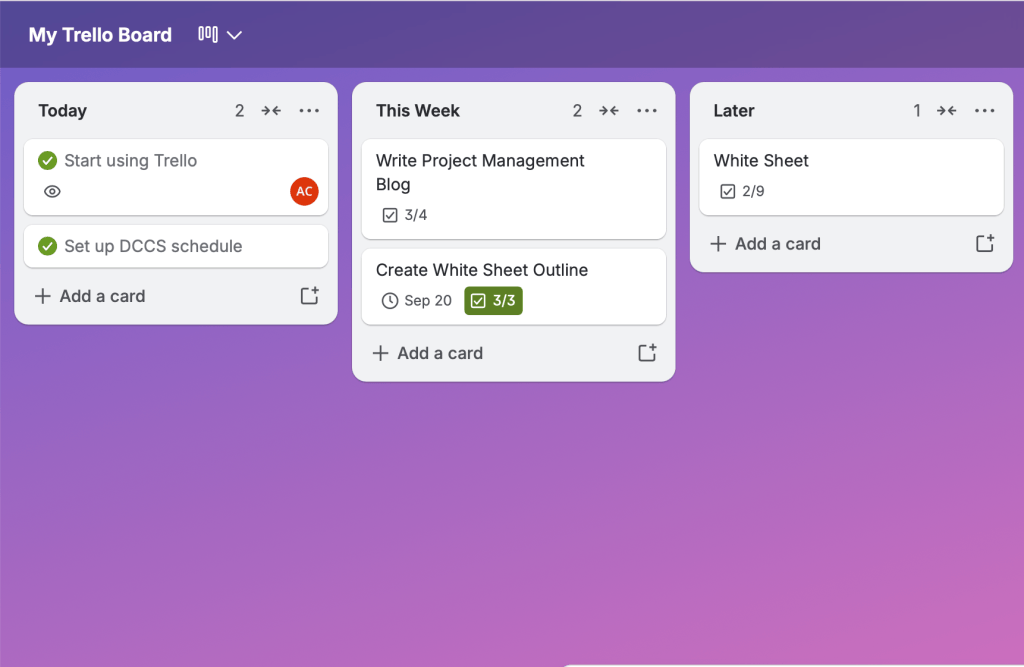
Kanban style means it uses visual boards with cards and columns to track progress on certain tasks.
On Trello, you use boards with checklists and images to parse what you must do today, this week, and in the future. As someone who struggles to break down tasks into small bite-sized chunks, I found this website to be super helpful.
The work is very visual and approachable, making you feel like you want to use the system. It’s also great for a person like me who believes there is no better feeling than crossing something off their list. On Trello, every task has a subtask, giving you even more opportunities to take things off your plate.
I used Trello to track some of my big upcoming projects. It has honestly made digesting these tasks easier by forcing me to figure out the smaller steps instead of trying to tackle a giant monster. It helps me reflect on the time, scope, and quality of the projects and work I am doing.
In a society that constantly hops from one task to another, it’s nice to know that there is a system that will really help me slow down, think deeply, and really focus on my own productivity.
Why My Digital Detox Failed?
I always thought social media detoxes were corny: the kind of thing people only did when they wanted to cash in their social currency to seem cool and subversive. Yet, I came into this social media detox optimistic.
I was then immediately dumped the first day. And there went my detox with my optimism.
My brain then became obsessed with checking the online status of our relationship. Did they post something on their story? Did they take down our photos? Did that song choice have a deeper meaning?
I had a lot of questions, and I knew social media wouldn’t give me the answers, but it might give me some clues.
And sadly, this is a relatable phenomenon. A recent survey found that 47% of people regularly view their ex’s social media after breaking up.
But I found that this constant checking wasn’t making me feel better, it was just making me jittery.
In fact, that same survey found that 69% of people still see their ex’s social media activity and 58% say that ability makes it harder to move on.
On Wednesday, I had enough. I put a block on Instagram and only let myself do my checks when I woke up and before I went to bed.
I found myself doing the little things I told myself I would do instead of scrolling. During lunch, I would read a chapter in my book. After dinner, I would watch an episode of TV to unwind.
But now that today officially ended my detox, I can’t say I feel any better.
Though I didn’t even fully do a true social media detox, being off it was hard. Friends would want to send me videos, and I’d need to explain references, and I couldn’t. It made me feel out of the loop and honestly even more alone.
So, the real question is: am I pathetic, or is this just socially impossible?
According to former senior Google strategist James Williams, it’s the latter.
In an interview with Johann Hari, Williams said digital detoxes are “not the solution, for the same reason that wearing a gas mask for two days a week outside isn’t the answer to pollution. It might, for a short period of time, keep, at an individual level, certain effects at bay. But it’s not sustainable, and it doesn’t address the systemic issues.”
As much as I learned how to navigate life without social media, I also learned how lonely and sad it can be with and without it. But it doesn’t have to be this way.
If we all come together to create the environments that make it easier to go without social media, it wouldn’t be so lonely. Even breakups.
I Want My Childhood Attention Span Back
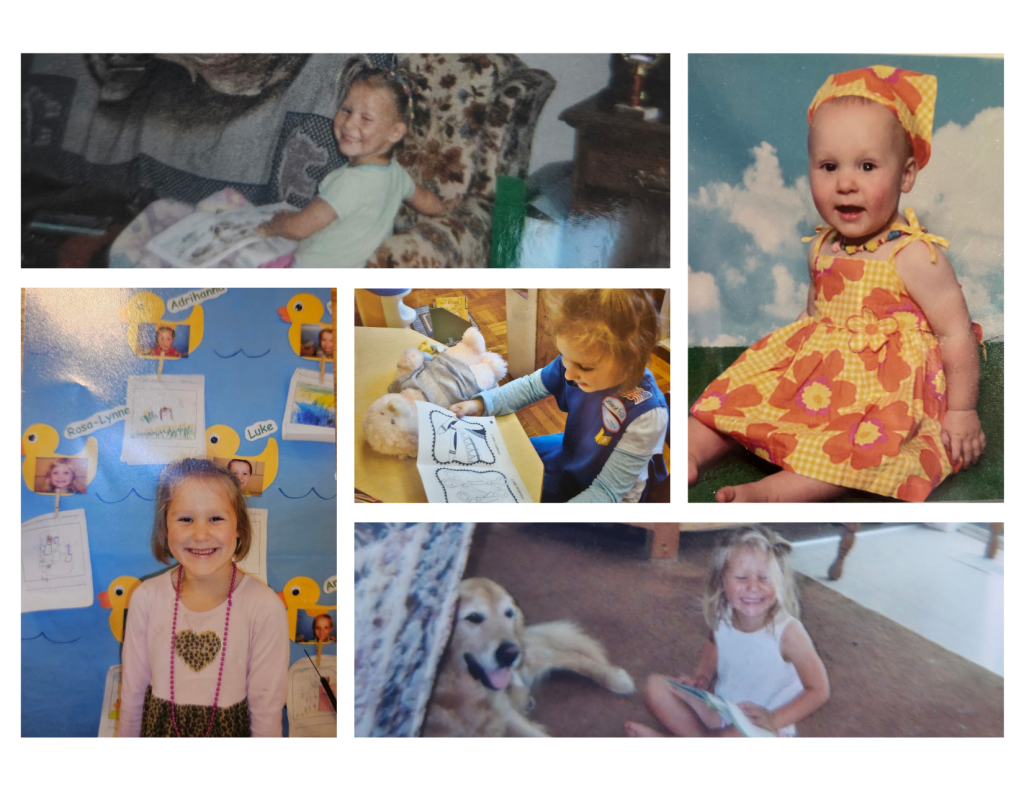
When I was a kid, my nose was permanently glued to a book. It didn’t matter where I went: dinners, dentists, and dime stores; I would always have a book with me. As I’ve gotten older, it seems that book has slowly been replaced by my phone.
I don’t really remember when the switch happened. All I know is that one day I was averaging two books a sitting; the next, I’m wondering if I’ve met even half of my reading goals.
So, what happened to my attention span? Because I want it back.
This happily (or rather unhappily) isn’t a unique experience. According to the American Time Use Survey, which studies around 26,000 Americans a year, reading had dropped by 40% for men and 29% for women between 2004 and 2017. In fact, a Gallup poll found that 57% of Americans don’t read a single book in a year.
I can’t say I fall in the latter category, but my reading has gotten exceptionally worse since I’ve gotten older. In 2020, I read 52 books. Last year, I read 17.
After some reflection, I’ve concluded that the issue isn’t necessarily that I’m not reading; it’s that a majority of what I’m reading is on screens. From the news I read in the morning to the assigned readings in class, all of it is online. I rarely find myself needing to carry around a paperback like I used to.
According to Anne Mangen, a professor of literacy at the University of Stavanger in Norway, screens encourage a manic way of reading. When using a screen, you’re more likely to skim and get distracted by things like pop-up ads and notifications.
When I read on screens, I don’t get as immersed as I do on paper. The words mean less, and I’m scanning for statistics and points I can use in lectures. I’m not truly interacting with the texts that I’m reading like I used to.
Books naturally encourage a completely different mindset than social media. Books make you slow down, think deeply, focus your attention, and empathize, while online, the focus is to get as much information in as little time as possible. There is no reflecting and honestly no real thinking.
This phenomenon impacts everybody’s understanding. According to over 54 studies, reading on screens instead of in books causes a reading gap of about 2/3rds of a year in elementary schoolers.
The major reason being because reading on screens is inherently inferior. It encourages fragmentation that doesn’t cultivate comprehension.
So how do I get back to the clarity I felt in my youth, when I was digesting two books a day like vitamins?
The simple conclusion I’ve come to is to carry it around. I find myself in the spaces of my day, grabbing at my phone for an instant dopamine hit. What would be the difference if I cultivated my time towards something that promotes long-term thinking and growth like a good novel?
I don’t know, but I do know it would bring me just a tad closer to the girl I used to be.
The Cost of Always Being Connected
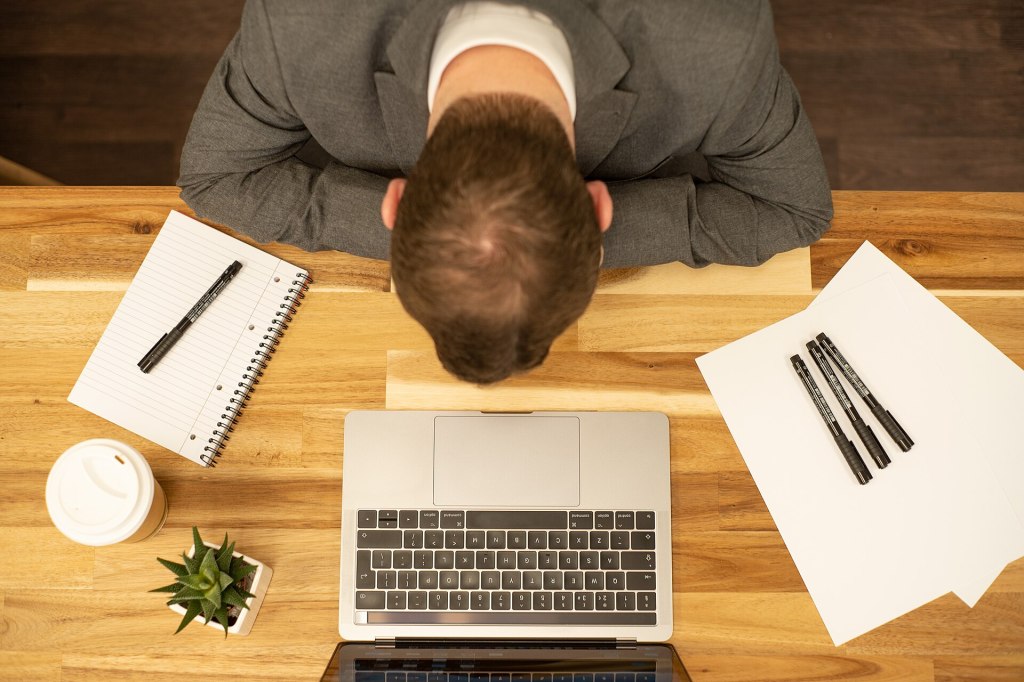
Reachability is the greatest and worst thing that has come from the internet. The constant barrage of messages and emails is the double-edged sword of the modern day.
I have always considered myself an optimistic person about technology. The internet has brought so much good. We can exchange ideas and knowledge quicker than anyone ever before, but it’s so exhausting.
“Stolen Focus” by Johann Hari describes this phenomenon as the equivalent of a fire hose of information constantly being fired at us.
According to a 2007 scientific study, the average amount of information a person receives a day would equate to 174 newspapers. Now imagine what that would look like almost 20 years later with even further advanced technology.
This overwhelming amount of information is even harder to avoid when you realize much of your day is spent online. According to “Stolen Focus”, an average person touches their phone 2,617 times a day.
But it’s socially impossible to not be checking your phone. In a world that expects 24/7 digital availability, consistently checking your notifications is a bare minimum.
According to a 2023 study by the American Psychological Association, the average person received 65-90 notifications a day. That means at least 65 times of checking your phone and responding to notifications.
This expectation is even harder to balance when you add the need to constantly be productive. With the rise of mobile phones, work stays with you at whatever time and wherever you go.
Every student has experienced working hard on a paper just to receive an urgent text or email that makes you stop and respond. According to studies, the average college student switches tasks every 65 seconds.
And these stops don’t come without a consequence. According to “Stolen Focus”, constantly switching between tasks causes you to become slower, make more mistakes, be less creative, and remember less of what you did.
This distraction causes long-term memory issues. According to a study commissioned by Hewlett-Packard, technological distraction, including emails and calls, caused office workers’ IQs to drop an average of ten points.
So where is the limit on our ever-accelerating online society?
According to data scientist Sune Lehamann, we are reaching it soon
“We’ve been accelerating for a very long time, and for sure, we are getting closer to whatever limits we have,” said Sune when interviewed by Hari. The acceleration “can’t continue indefinitely. There’s some physical limit to how fast things can move. It must stop at some point. But I don’t see any slowing down right now”.
And the sad thing is, do any of us?

